
If you are a qualified, registered nurse with the right credentials and you are ready to work in Ireland, EuroHire can place you directly into full-time nursing employment — at no cost to you. We are paid by the employer. You pay nothing.
We connect internationally qualified nurses with hospitals, nursing homes, private clinics, and HSE-contracted care facilities across Ireland. We handle the matching, the paperwork, the registration guidance, and the relocation support — so you can focus on your move and your career.
Our Ireland Direct Recruitment service is designed for qualified healthcare professionals who are ready to begin their careers in Ireland. From application to relocation, we provide complete guidance throughout the recruitment journey.
If you are still working toward your OET score, or if your NMBI eligibility is not yet confirmed, our Ireland Work & Study Programme may be a better starting point. It combines OET preparation with paid part-time social care work and full registration support. You can find out more on the Ireland Work & Study page.
We do not send your CV to every employer and hope for the best. We take the time to understand your qualifications, your clinical background, your specialty experience, and where in Ireland you would like to work. We then match you with employers whose vacancies and culture are genuinely suited to you. Our employer network includes public hospitals, private hospitals, HSE-contracted facilities, nursing homes, and community care settings across Ireland.

Irish healthcare interviews have a particular format and set of expectations that can feel unfamiliar if you have not worked in Ireland before. Before any interview, we brief you on what the employer is looking for, what questions are typically asked, and how to present your clinical experience in an Irish healthcare context. We do not send you into an interview unprepared.

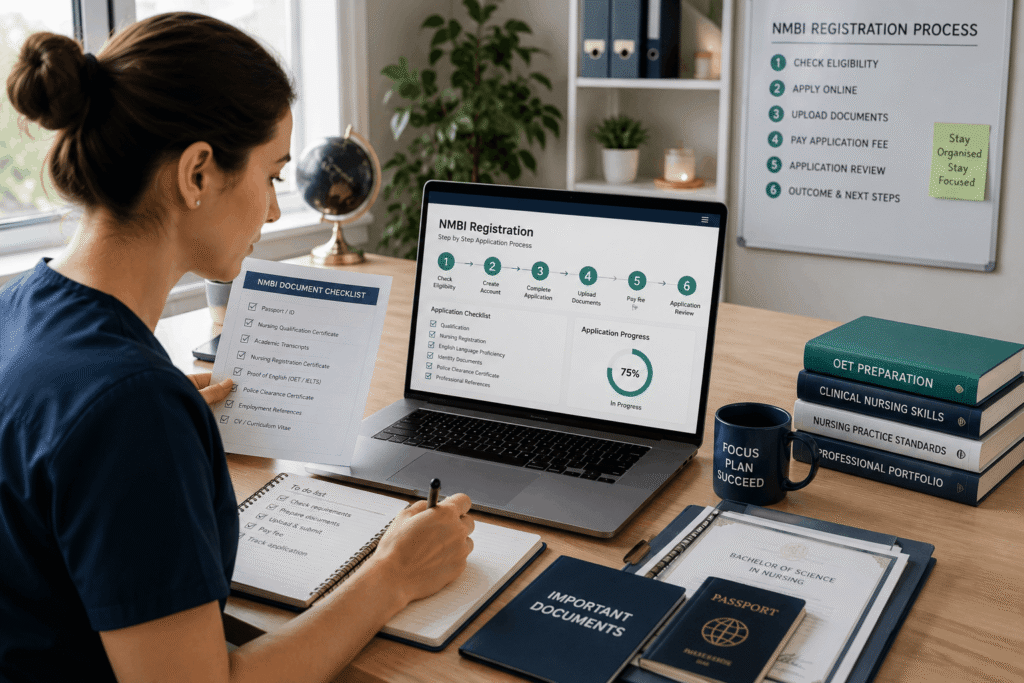
All internationally qualified nurses must obtain registration with the Nursing and Midwifery Board of Ireland (NMBI) before they can work as a Registered Nurse in Ireland. NMBI assesses your nursing qualification, your clinical experience, and your English language results. The process involves submitting a specific set of documents, and it can take time.
EuroHire guides you through every stage — what documents you need, how to get them in the right format, how to submit your application, and how to track your progress. Final registration decisions rest with NMBI as an independent regulatory body, but we stay with you throughout and help you respond to any queries or additional requirements they raise.
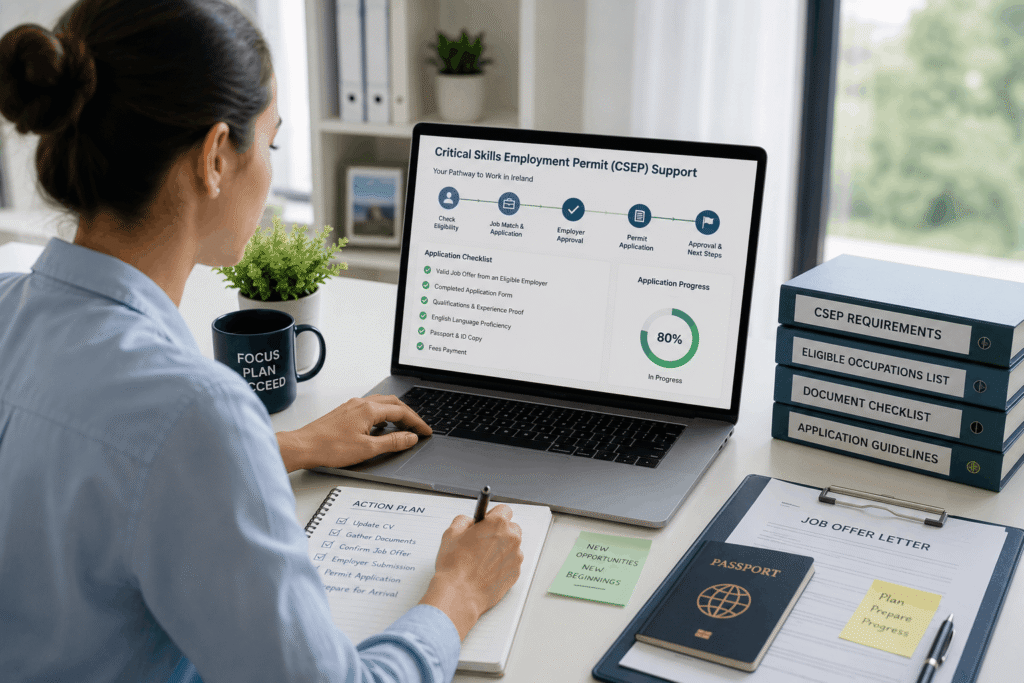
Once you have a confirmed job offer and a signed employment contract from an Irish healthcare employer, your employer applies for a Critical Skills Employment Permit (CSEP) on your behalf. The CSEP is the work permit issued by the Irish government that gives you the legal right to work in Ireland as a Registered Nurse. As of March 2026, the minimum annual salary for a nurse CSEP is €40,904.
EuroHire guides both you and your employer through the CSEP application — making sure the paperwork is correct, the timelines are managed, and there are no avoidable delays. The employer pays for the permit application. You pay nothing.
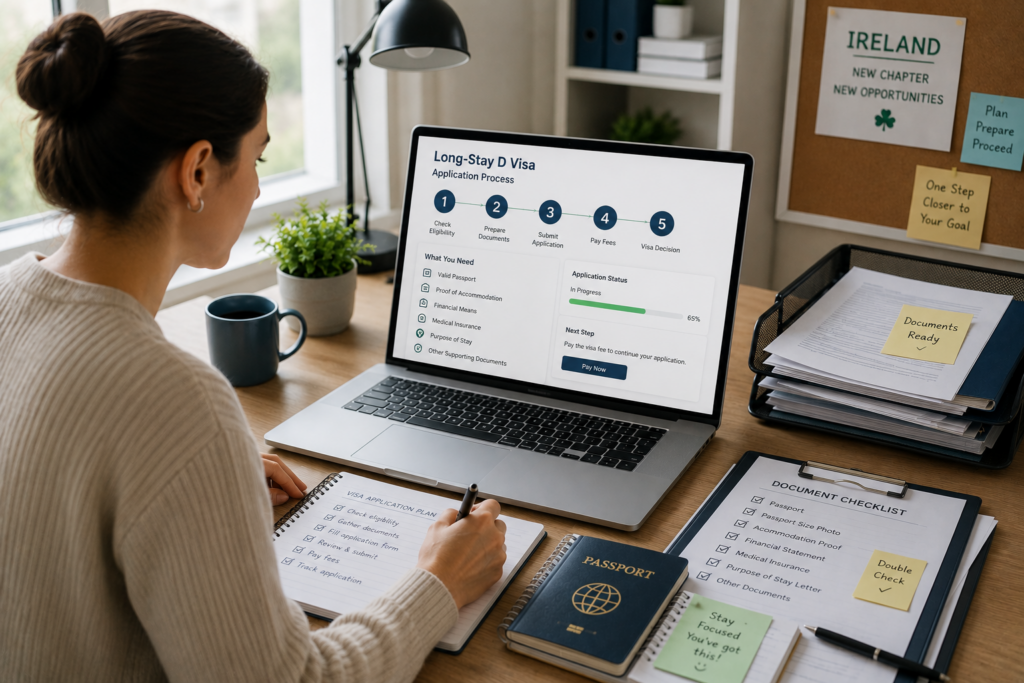
Once your CSEP is approved, you apply for a Long-Stay D Visa (Employment Visa) from your home country. This is the immigration visa that allows you to enter Ireland as a worker rather than as a student. The sequence is: CSEP approved first, then D Visa application, then travel to Ireland.
EuroHire provides guidance on your visa application — what documents are needed, how to apply, and what to expect at the embassy stage. This visa is separate from a student visa. If you have previously been in Ireland on a Stamp 2 (student permission), you will need to return home to apply for the D Visa before re-entering as a worker.
Moving to a new country for work is a significant step. EuroHire helps you prepare practically — what to expect when you arrive, how the Irish healthcare system works, what compliance steps you need to complete in your first weeks (IRP card, PPS Number, bank account, occupational health clearance), and where to find accommodation. Many of our employer partners also offer a relocation package that may include contribution toward your initial accommodation or travel costs — we will confirm what is on offer before you accept any role.

Our involvement does not end when you start your role. We stay in contact after you begin work to make sure the placement is working well for both you and the employer. If any issues arise in your first months, we are available to help resolve them. We want to make sure you are set up for a long-term nursing career in Ireland, not just placed and forgotten.

Registered nurses in Ireland typically earn between €38,000 and €45,000+ per year in a full-time role, depending on the employer, the sector (public HSE vs private), shift allowances, and your level of experience.
Many employers also offer a relocation package for international nurses. This may include a contribution toward your flight home for CSEP processing, accommodation support during your first weeks, and coverage of RCSI preparation costs where the NMBI requires you to sit that examination.
During your first two to four weeks in Ireland, you may need to complete mandatory induction training and compliance requirements before beginning clinical work. Your employer will advise on whether this period is paid and what it involves.

Here is a step-by-step overview of how the Direct Recruitment pathway works from application to your first day in a nursing role:
register your interest and provide your basic details
we review your qualifications, experience, English language results, and documentation
we support you in submitting your application to NMBI for assessment of your nursing qualifications
NMBI confirms the steps required for registration; some candidates proceed directly, others are required to complete the RCSI aptitude examination
we identify suitable roles based on your specialty, experience, and location preferences
we brief you and arrange interviews with matched employers
your employer makes a formal offer
your employer applies for your Critical Skills Employment Permit on your behalf
once the CSEP is approved, you apply for your employment visa from your home country
IRP card, PPS Number, bank account, Garda Vetting, occupational health clearance
you begin work as a Registered Nurse with your sponsoring employer
Here is a step-by-step overview of how the Direct Recruitment pathway works from application to your first day in a nursing role:
register your interest and provide your basic details
we review your qualifications, experience, English language results, and documentation
we support you in submitting your application to NMBI for assessment of your nursing qualifications
NMBI confirms the steps required for registration; some candidates proceed directly, others are required to complete the RCSI aptitude examination
we identify suitable roles based on your specialty, experience, and location preferences
we brief you and arrange interviews with matched employers
your employer makes a formal offer
your employer applies for your Critical Skills Employment Permit on your behalf
once the CSEP is approved, you apply for your employment visa from your home country
IRP card, PPS Number, bank account, Garda Vetting, occupational health clearance
you begin work as a Registered Nurse with your sponsoring employer
The full process from application to starting work typically takes between three and six months. This varies depending on NMBI processing times, employer scheduling, and visa processing at your local embassy.
To be considered for the Ireland Direct Recruitment pathway, candidates are generally expected to meet the following requirements. If you are unsure whether you qualify, contact us — we will review your profile and advise honestly.
This service is free for candidates. You will never be charged a fee by EuroHire at any stage of the recruitment process.
EuroHire is paid by the employer when a successful placement is made. That means our incentive is to find you the right role, not just any role. We have no reason to rush you into a placement that is not right for your career. We will tell you honestly if a role does not suit your profile, and we will keep working until we find one that does.
We operate in line with WHO ethical recruitment standards. Every candidate we work with receives a clear explanation of what the process involves, what the costs are (there are none for you), what the employer is offering, and what your rights are as a worker in Ireland. There are no hidden fees, no contract clauses you have not been told about, and no surprises after you arrive.
Our nurses come from countries with rigorous nursing training standards and high-demand clinical environments — including India, the UK, and selected African markets. Wherever you trained, if you are joining EuroHire's Direct Recruitment programme, it is because your qualifications, your clinical experience, and your professional record meet a high bar. We are selective about who we represent, because the employers we work with trust us to put forward candidates who are genuinely ready for the Irish healthcare setting — and that trust protects your reputation as much as theirs.
EuroHire is actively placing nurses in Ireland and has established relationships with employers across the HSE, private hospital groups, nursing home groups, and community care settings. We understand what Irish employers are looking for, what the NMBI process involves, and how to navigate the CSEP and visa pathway. This is not a general recruitment agency that occasionally places healthcare workers — Ireland is our core market.
Most international recruitment agencies hand you over to the employer once a placement is agreed. EuroHire stays involved from initial application through to your first months in post. We support your NMBI application, guide you and your employer through the CSEP process, help with visa documentation, and stay in contact after you start work. You will have a named contact at EuroHire throughout the process.
Yes, completely. EuroHire's Direct Recruitment service costs nothing to you at any stage. We are paid by the employer when a successful placement is made. You will never be asked for a registration fee, a programme fee, an agency fee, or any other charge. If any organisation claims to be acting on EuroHire's behalf and asks you for money, please contact us immediately.
The Direct Recruitment pathway is for nurses who are already eligible to work in Ireland — you have your OET, your qualifications are NMBI-eligible, and you are ready to move into a full-time nursing role. The Work & Study Programme is for nurses who are not yet ready for direct placement — for example, if your OET is pending, your NMBI eligibility is uncertain, or you want to build Irish healthcare experience before moving into a registered nursing role. If you are not sure which pathway suits you, contact us and we will advise.
A valid OET score is required for most NMBI registration applications, so it is an important part of the process. However, you do not need to have your OET result before you first contact us. We can assess your overall profile and advise on the best next steps, including whether you need to sit or resit the OET before your NMBI application can progress.
We recruit across a range of nursing specialties including general nursing, mental health nursing, intellectual disability nursing, and care of the elderly. Demand varies depending on current employer vacancies. When you register with us, we will discuss your specialty and experience and match you accordingly.
Our employer network covers locations across Ireland — Dublin and the greater Dublin area, Cork, Limerick, Galway, and regional towns and cities. Some roles are in urban hospital settings; others are in nursing homes or community care settings in smaller towns. We will discuss location with you during the matching process.
From initial application to starting your role in Ireland, the process typically takes between three and six months. The main variables are NMBI processing time (which can take eight to twelve weeks or longer depending on your application), employer scheduling, and visa processing at your local Irish embassy. We will give you a realistic timeline based on your individual situation once we have reviewed your profile.
You will travel to Ireland on a Long-Stay D Visa (Employment Visa). This is issued after your Critical Skills Employment Permit (CSEP) is approved by the Irish government. The CSEP is applied for by your employer on your behalf once you have a signed employment contract. This visa is different from a student visa — it gives you the right to live and work in Ireland as an employed nurse.
Yes. You must hold NMBI registration and a Personal Identification Number (PIN) before you can work as a Registered Nurse in Ireland. EuroHire supports you through the NMBI application process, but it is important to understand that registration decisions are made independently by NMBI. We help you present the strongest possible application and respond to any additional requirements they raise.
The Royal College of Surgeons in Ireland (RCSI) administers an aptitude examination that some internationally qualified nurses are required to complete as part of their pathway to NMBI registration. Whether you need to sit it will be confirmed in your NMBI Decision Letter. Not every candidate is required to do so. If the RCSI exam is required, it is typically completed after you arrive in Ireland on your employment visa, and the cost of RCSI preparation is usually covered by your employer as part of your relocation package.
NMBI decisions depend on qualification equivalency, your documentation, your professional background, and the outcome of their assessment. Some candidates may be required to complete additional examinations, provide further documentation, or undergo an adaptation programme. As NMBI is an independent regulatory body, registration cannot be guaranteed. EuroHire will support you through the process and advise on any additional requirements that arise, but we cannot influence NMBI's decision.
Accommodation is not automatically provided, but many of our employer partners offer a relocation package that includes some accommodation support — for example, contribution toward your first month's accommodation or assistance finding shared housing near your workplace. Our team will explain exactly what each employer offers before you accept a role, so there are no surprises when you arrive.
Family reunification options in Ireland depend on your immigration status, permit type, income level, and employment situation. These possibilities are typically explored after you have been working in Ireland for a period and have established stable long-term employment. We can provide general guidance on this, but for specific immigration advice on family sponsorship we recommend consulting an Irish immigration solicitor.
Yes. Reasonable and explainable career gaps are generally accepted. Common examples include time taken for OET preparation, NMBI documentation, maternity or parental leave, further studies, or a period of caring for a family member. You will need to account for any gaps in your employment history as part of your application, and we will help you present this clearly.